What If Something Happens to Parents in India? (NRI Guide)
An emergency plan for NRI children whose parents live alone in India: what to set up now, what to do in the first hour, and what happens at the hospital.
If your parents live alone in India and you live abroad, the moment you fear is a call at night: a fall, chest pain, or no answer at all. This guide is the plan to have in place before that call comes. It covers what to set up now, what to do in the first hour, and what happens at the hospital, from thousands of kilometres away.
Why Cameras and Domestic Help Are Not a Plan
Many families install cameras and hire help. Both are useful, but neither is an emergency plan.
A camera can show you that something is wrong, but it cannot pick your parent up or get them to hospital. Domestic help works fixed hours, takes leave, and may not know what to do in a real emergency. What matters is a named person in India who can reach your parent quickly at any hour, and a plan they already know.
Before an Emergency: What to Set Up Now
- Choose the first responder. Agree with one relative, friend or neighbour in the same city that they are the first call, and a second person if the first cannot be reached. Make sure they have a key or a way in.
- Make an emergency folder. A one-page medical summary (conditions, medicines, allergies, doctors), the health insurance card and policy number, ID proof, and phone numbers for family in India and abroad. Keep a copy near the door, and a scan on your phone and theirs.
- Pick the hospital in advance. Choose the nearest multi-specialty hospital that is in your parents' insurance network for cashless treatment, and note the drive time at night.
- Save the emergency numbers. 112 is India's national emergency number. 108 is the government ambulance service in most states, including Tamil Nadu. Save both, and the chosen hospital's ambulance number, on your parents' phones and the first responder's.
- Sort the paperwork. A power of attorney lets a trusted person in India act for your parents if they cannot. Make sure money can reach a hospital quickly, for example through an account the first responder can use or a joint account.
- Consider an alert device. A phone or watch with an SOS button or fall alert, set to call the first responder, means your parent does not have to reach a phone.
In the First Hour
- Get help to your parent. Call the first responder, and if it is urgent, have someone call 112 or 108. Do not wait to reach a doctor first.
- Send the folder. Share the medical summary and insurance details with the first responder so they reach the hospital with them.
- Call the hospital. Once your parent is on the way, call the emergency department, give your parent's name, and say that you are family abroad and who will arrive in person.
At the Hospital
Hospitals usually need a family member or authorised person present to sign consent forms and to arrange payment or the insurance claim. This is where the first responder, the power of attorney and the insurance details matter most. Ask the hospital for a single doctor or coordinator to call for updates, and agree a time each day for the call.
When Living Alone Stops Working
For some parents, the plan above is enough. For others, the gaps keep showing: nobody nearby at night, help that does not turn up, a house that is too much to run. Moving to a staffed community closes those gaps, because someone is on site day and night. The guide to retirement homes for NRI parents covers what to look for, and if the decision feels hard, read is it wrong to put parents in a retirement home?
| Parent living alone at home | Staffed independent community | |
|---|---|---|
| Who notices first | Depends on the parent reaching a phone | On-site staff, day and night |
| Who acts first | A relative or neighbour, if reachable | Staff on campus |
| Day-to-day running | Managed by the parent or from abroad | Meals and housekeeping handled |
How Aran Fits
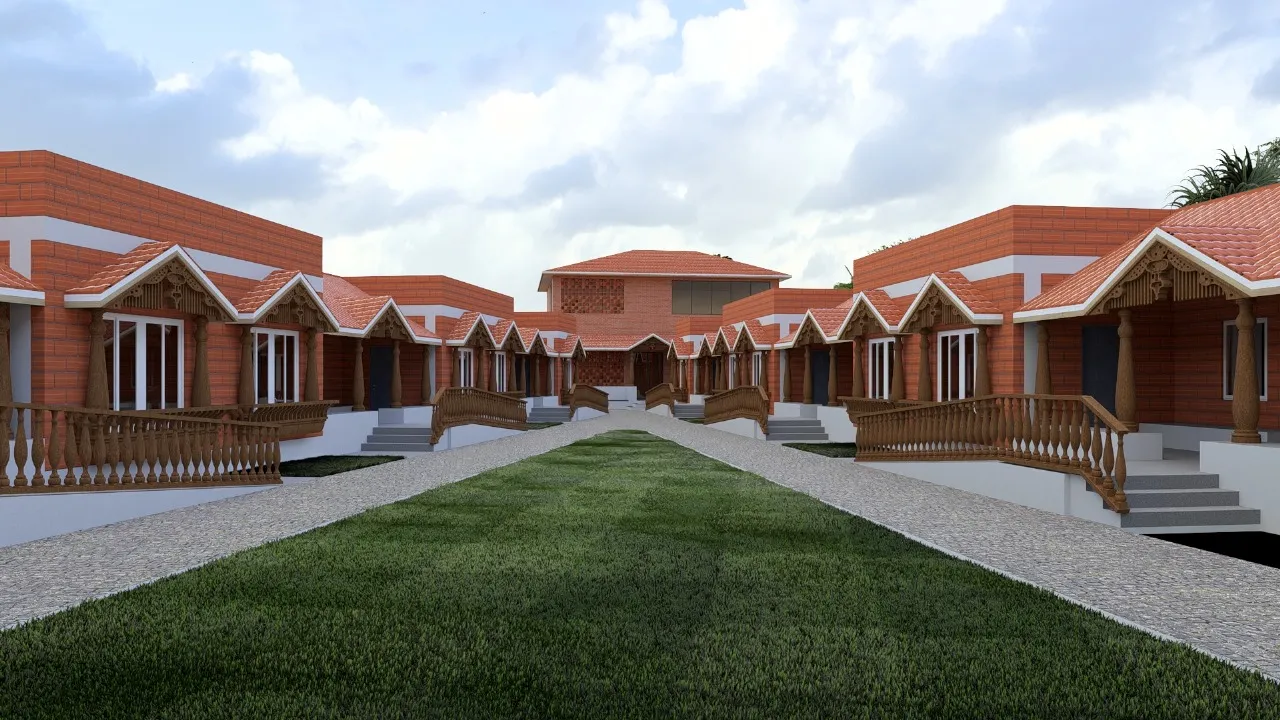
Aran Senior Living in Thondamuthur, Coimbatore, is independent living for adults aged 50 and over. Pressing SOS alerts the on-site staff straight away, wherever on campus the resident is, and the command center is staffed 24/7. KG Hospital and Ganga Hospital are about 20 km (roughly 30 minutes) away, and Coimbatore International Airport is about 30 km away for family visiting from abroad. The hospital, insurance and paperwork steps above are still worth setting up.