What to Look for in a Retirement Home in India: A Checklist
A checklist for choosing a retirement home in India: money and deposit terms, RERA and contracts, care level, emergencies, hospital distance and a trial stay.
Choosing a retirement home in India comes down to a few questions most brochures skip: what the monthly fee really covers, how you get your deposit back, what happens at night if something goes wrong, and whether the community can still support you if your needs change. This checklist covers each of them, with the questions to ask and a scorecard you can print and take on visits.
The list applies whether you are choosing for yourself or for a parent, and whether the community sells units or rents them.
1. Know What Kind of Community It Is
Three very different kinds of place get called "retirement homes" in India:
- Independent living is for adults who manage their own daily routine. Meals, housekeeping and emergency response are provided.
- Assisted living adds help with daily tasks such as bathing, dressing or medication.
- A nursing home provides round-the-clock nursing for people with medical needs.
Ask each community which one it is, in those words, and what happens if a resident's needs move to the next level. A good answer names where the resident would go and who arranges it. If a community says it is "independent" but talks about nurses on call, ask to see that in the agreement.
2. Read the Money Terms Before the Brochure
Communities in India either sell units or rent them, and some do both. In Coimbatore, for example, units in senior communities were listed from about ₹21.7 lakh to ₹1.8 crore to buy, and rents from about ₹21,000 to ₹53,000 a month (see the rent vs buy comparison for Coimbatore for the full list and source).
Whichever model you choose, get these answers in writing:
- What the monthly fee includes. Meals, housekeeping, laundry, electricity, water, maintenance: list each one and mark it included or extra.
- The deposit. How much it is, whether it is fully refundable, how soon it is refunded after leaving, and what can be deducted from it. As a yardstick, the central government's model guidelines for retirement homes expect a maintenance security deposit to be refunded within three months of asking.
- Increases. How often the monthly fee can go up, and by how much.
- The exit clause. How much notice you must give, and what happens to the deposit or the unit if a resident moves to hospital long term or passes away.
- If you are buying: the monthly service charge on top of the purchase, and any rules on who you can resell to.
For a fuller picture of what these numbers look like across the country, see our guide to retirement home costs in India.
3. Check the Legal Basics
If you are buying a unit, the project should be registered with your state's Real Estate Regulatory Authority (RERA). Ask for the registration number and look it up on the state RERA website before paying anything.
In 2019 the Ministry of Housing and Urban Affairs issued model guidelines for retirement homes, which call for a three-party agreement between the developer, the company that will run the community and the buyer, with the operator's capability disclosed at signing, so it is clear who is responsible for services after the sale (Moneylife Foundation; Housing.com). Maharashtra was the first state to turn this into binding rules: since May 2024, projects there must meet set physical and safety specifications before they can be advertised as retirement homes (Outlook Money).
Outside Maharashtra those specifications are not compulsory, but they make a useful checklist for any community.
4. Walk the Campus for Safety and Access
Maharashtra's specifications are a practical list to check on a visit:
- Lifts large enough for a wheelchair in any building with more than one floor.
- Ramps and enough space for a wheelchair inside residences and outside.
- Handrails on both sides of stairs, and lit or glow strips on steps.
- Anti-skid tiles and outward-opening doors in bathrooms.
- Emergency alarm controls at the bedside and in the bathroom.
- Good lighting in corridors, lobbies and lifts.
Then ask how the emergency alarm works in practice. Who sees the alert at 2 a.m., how many staff are on site at night, and whether help can be called from anywhere on campus or only from inside a residence.
5. Time the Drive to Hospital
Distance on a map says little. Check the drive time to the nearest multi-specialty hospital at the time of day that matters, and ask how a resident gets there in an emergency: does the community call an ambulance, and does anyone go along? Find out whether the community has any written arrangement with a hospital, or simply sits near one.
6. Spend a Day on Daily Life
- Food: eat a meal there. Ask whether the kitchen is vegetarian or not, how often the menu changes, and whether it can handle a diabetic or low-salt diet.
- People: how many residents there are, and whether they are people you would want as neighbours.
- Rules: visiting hours, overnight guests, and whether residents can come and go freely.
- Noise and privacy: visit in the morning and the evening.
7. Ask for a Trial Stay
A few days in residence tell you more than any tour: how the food is on the fourth day, how staff respond when you ask for something, and whether the place feels like home. Ask for a short trial stay before signing a long agreement.
Printable Scorecard
Score each question from 1 (poor) to 5 (excellent) for every community you visit.
| What to check | A good answer looks like | Score (1–5) |
|---|---|---|
| Type of community | Clearly stated: independent living, assisted living or nursing home | |
| What the monthly fee includes | A written list, item by item | |
| Deposit | Amount, refund timeline and possible deductions in writing | |
| Fee increases | A stated limit and frequency | |
| Exit clause | Clear notice period; clear terms for hospital stays and death | |
| RERA (if buying) | Registration number you have verified online | |
| Emergency alerts | Works at night and across the campus; named responders | |
| Night staff | A stated number on site every night | |
| Hospital | Drive time you have checked yourself; clear transport plan | |
| Access | Ramps, wheelchair-size lifts, bathroom alarms, anti-skid floors | |
| Food | You ate there and would eat it every day | |
| Trial stay | Offered before a long commitment |
How Aran Answers These Questions
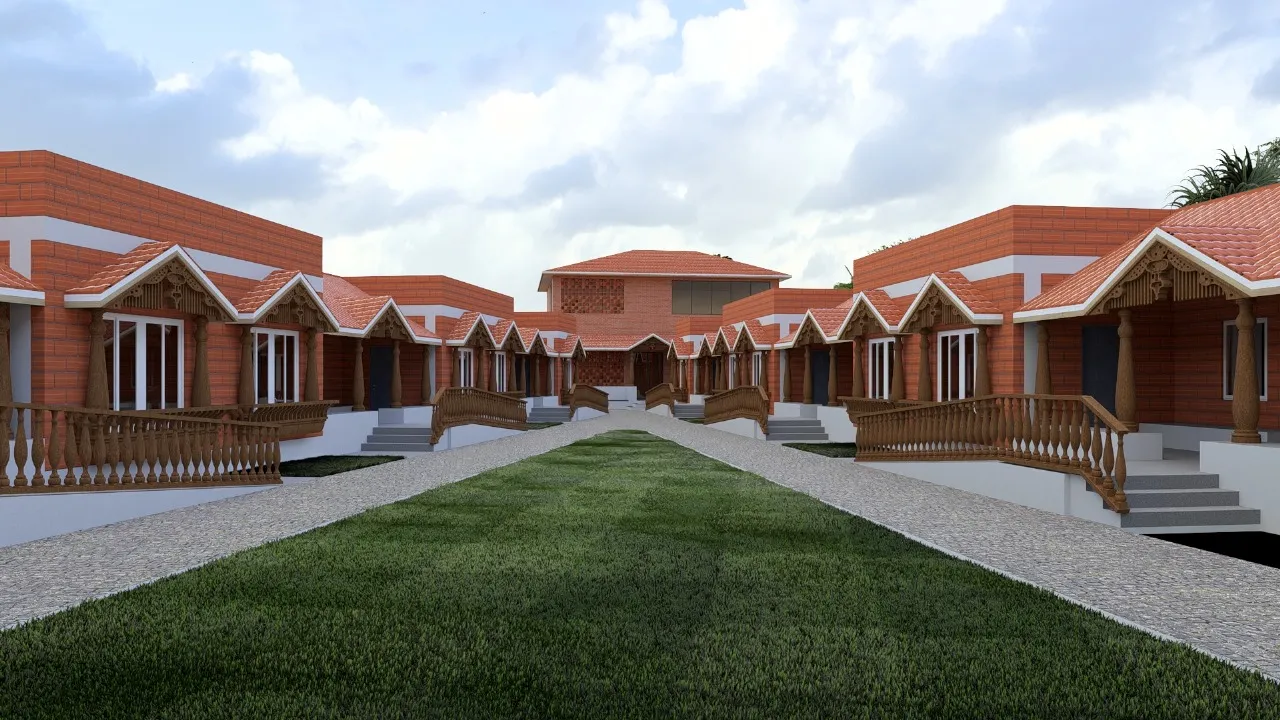
Aran Senior Living in Thondamuthur, Coimbatore, is independent living for adults 50 and over, with 18 furnished residences. It is rented by the month with a standard refundable security deposit, and the rent includes pure vegetarian meals, housekeeping and laundry. Pressing SOS alerts the on-site staff straight away, wherever on campus the resident is, and KG Hospital and Ganga Hospital are about 20 km (roughly 30 minutes) away. Short stays of a few days are available to try it first. Use the scorecard on Aran as you would anywhere else, and ask us any of the questions above.